
Mission

Educate Every Indian

Bridging the gap between constitutional promise and educational reality.

India has recognized education as a fundamental right.
Yet millions remain outside its reach.

Executive Summary

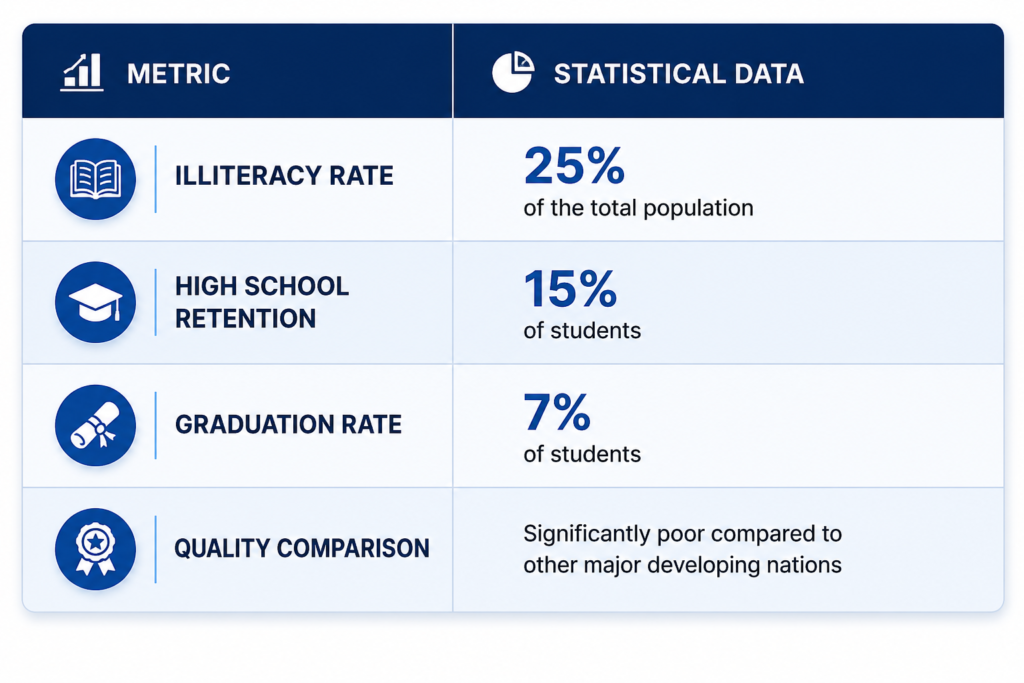
The “Educate Every Indian” mission addresses a critical gap between India’s constitutional mandates and its current educational reality. While the Right to Education (RTE) Act of 2009 established education as a fundamental right for children aged 6 to 14, the nation continues to face severe systemic hurdles. Current data indicates a 25% illiteracy rate, significant student attrition—with only 7% of students reaching graduation—and a substantial deficit in the quality and capacity of higher education institutions. The mission aims to mobilize social awareness and collective responsibility to bridge these gaps, with the ultimate goal of elevating India’s educational standing to match that of developed nations.

Legal and Constitutional Framework

Education in India is positioned not merely as a social service but as a fundamental legal right. This shift was codified through specific legislative actions:

  • Article 21a of the Indian Constitution: Provides the constitutional basis for education as a fundamental right.
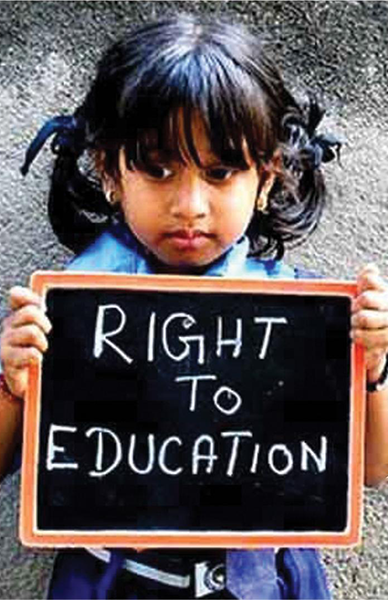
  • The Right of Children to Free and Compulsory Education Act (RTE): Passed by the Indian Parliament on August 4, 2009, this act outlines the modalities for providing free and compulsory education to children between the ages of 6 and 14.
  • Global Standing: On April 1, 2010, when the RTE Act came into force, India became one of 135 countries globally to recognize education as a fundamental right for every child.

Analysis of Educational Challenges and Attrition

Despite the legal mandates and increasing investments, the Indian educational system faces “stern challenges” regarding literacy, retention, and quality. The following table highlights the disparity between the population and educational attainment as of the reported data:

Deficits in Higher Education Infrastructure

The post-secondary sector suffers from acute shortages in both physical capacity and human capital. Data from 2008 reveals significant gaps in the readiness of India’s higher education system:

  • Capacity Constraints: Institutional seating is available for only 7% of the college-age population.
  • Faculty Vacancies: 25% of teaching positions nationwide remain unfilled.
  • Qualification Gaps: 57% of existing college professors do not possess a Master’s degree or a PhD, raising concerns regarding the academic rigor and quality of instruction.

The Educate Every Indian Mission

The mission is framed as a grassroots movement driven by social responsibility and the necessity of nation-building.

Core Objectives

The primary intent is to create “mass awareness” regarding the necessity of educating the entire population. It advocates for a transition from a system where quality education is a privilege for the few to a standard available to all.

Philosophical Motivations

The mission is built on the principle of social reciprocity. It posits that those who have benefited from quality education have a duty to “pay back to the society” to further the interests of the country.

Strategic Vision

The mission seeks to align India’s educational outcomes with those of developed nations, specifically citing the USA as a benchmark. It utilizes social media platforms, specifically Facebook, to organize support and invite participation from a broad demographic to foster an “educationally advanced” nation.

If you agree to this vision and want to support this mission, please do feel free to invite all your friends to this Facebook page below. Let’s work together to make India one of the educationally advanced countries in parallel to the USA or any of the developed nations in the world.

Articles & Knowledge Resources

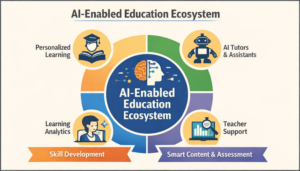
AI-Enabled Education Model for India

Education systems around the world are undergoing a profound transformation. The rapid emergence of artificial intelligence (AI) has created an opportunity to redesign how knowledge is delivered, assessed, and applied.

Follow the Conversation

Stay connected and join the discussion on social media

error: Content is protected !!