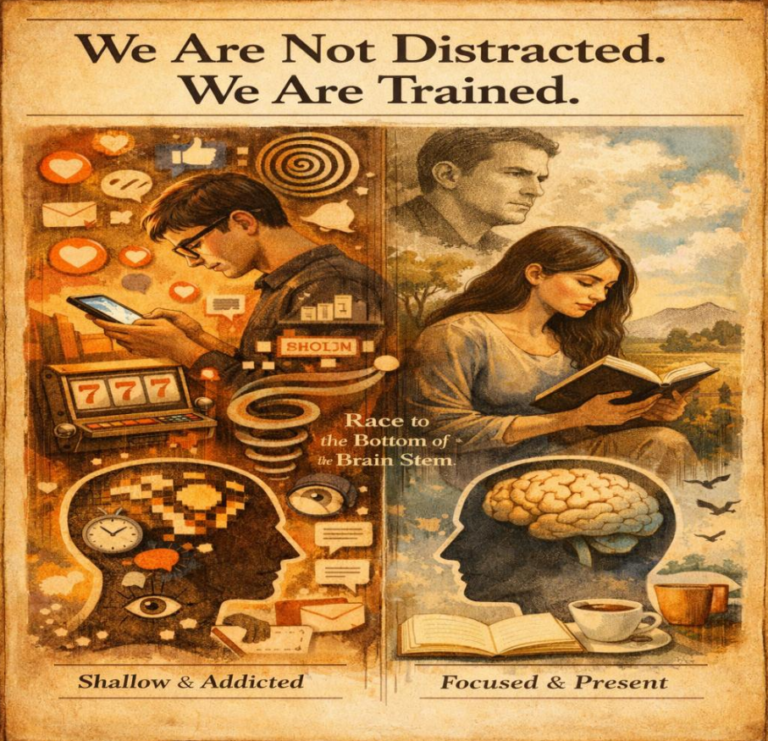

In today’s digital world, many children now scroll rather than play outdoors, read, or engage in conversation during their free time. Short-form video platforms have turned entertainment into a continuous stream of brief content, designed to capture and retain attention. Although these platforms may seem harmless, their long-term effects on children’s productivity, attention span, and well-being are cause for concern.

The Hidden Cost of Endless Scrolling
Scrolling videos are made to grab attention fast and keep people watching. Every swipe brings something new, which teaches children to look for quick rewards. Over time, this makes it harder for them to focus for long periods and weakens important skills they need for learning and growing.
Imagine a 12-year-old starting homework, getting bored, and picking up their phone for a quick break. That short break turns into 30 to 40 minutes of scrolling. When they go back to homework, it’s harder to focus. If this happens every day, it can hurt their discipline and
schoolwork. Teachers say students have trouble focusing, often check their devices, and are less patient with deep learning.
Impact on Mental and Emotional Well-being
The effects are not just about productivity. Watching fast-paced content all the time can lead to:
- Reduced attention span
- Increased anxiety and restlessness
- Sleep disruption due to late-night scrolling
- Lower self-esteem, as children compare their lives with curated online content
Even adults often struggle to stop scrolling, so it’s no surprise that children, whose brains are still developing, are even more at risk. Many experts from different fields have spoken out about the dangers of spending too much time online:
- Steve Jobs famously restricted his own children’s use of technology at home, despite leading one of the world’s most influential tech companies.
- Bill Gates has openly limited his children’s screen time, emphasising balanced use and delayed exposure to smartphones.
- Tristan Harris (Center for Humane Technology) warns: “We are not the users of technology; we are the product. These platforms are competing for our attention.”
- Sundar Pichai has highlighted the importance of “responsible AI and technology use,” acknowledging its powerful influence on behaviour.
These examples show that even the people who create this technology are often the most careful about how it’s used.
How to Break the Cycle
The answer isn’t to get rid of technology, but to use it thoughtfully. Families can try these practical steps:
- Create Structured Screen
Time Set clear rules, like no devices during study time, meals, or before bed. Being consistent makes a big difference. - Encourage Deep Engagement
Suggest activities that need focus, like reading, playing sports, doing puzzles, or creative hobbies. These can help rebuild attention spans. - Introduce “No-Phone Zones”
Make bedrooms and study spaces free of devices to help kids sleep better and concentrate more easily. - Lead by Example
Kids copy what adults do. If parents are always on their phones, kids will do the same. Being aware of your own habits at home is important. - Use Technology Intentionally
Try to move from just scrolling to using technology for learning, building skills, or watching educational videos.
The Role of Parents: Guiding, Not Controlling
Parents today have the tough job of raising kids in a world very different from the one they grew up in. The goal isn’t strict control, but helping kids understand and make good choices. Talking about digital habits, explaining why limits matter, and building trust work better than just making rules:
A simple question can make a difference:
“Did this time on your phone help you grow, or just pass the time?”
Conclusion
Scrolling videos might seem harmless, but over time, they quietly change how children think by making it harder to concentrate, lowering productivity, and affecting their emotions. If nothing is done, these changes could shape how the next generation learns, manages themselves, and uses technology.
Start now by helping children use technology on purpose, setting clear rules, and showing balanced habits yourself. This way, technology will work for them, not the other way around.