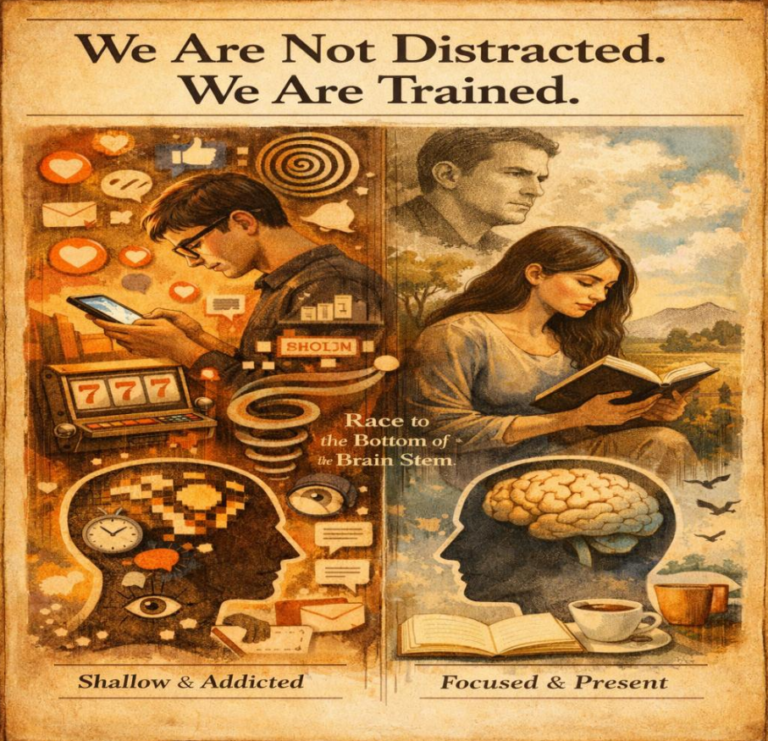
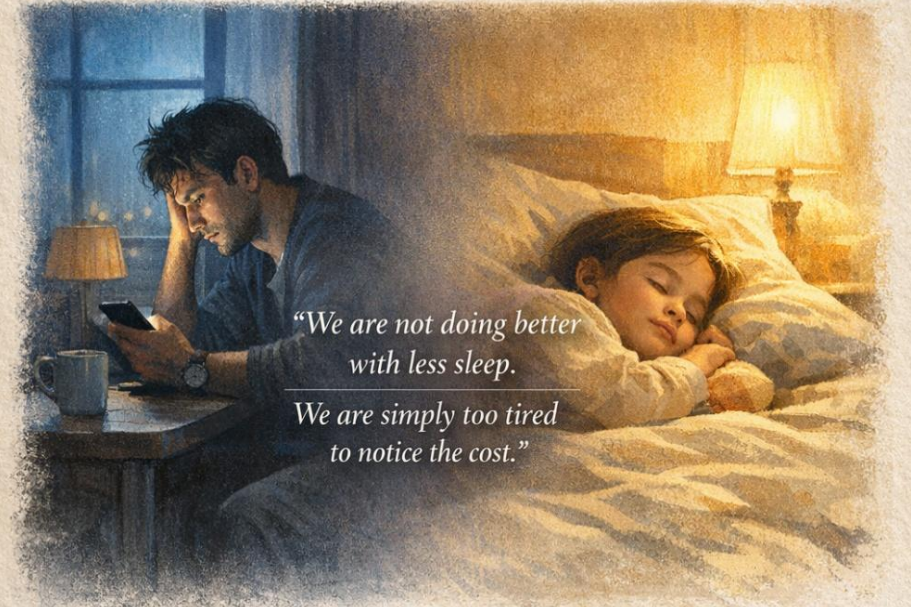
Take a look around. There’s the colleague who proudly talks about getting just five hours of sleep. The student who stays up all night before an exam and calls it dedication. The parent who scrolls on their phone after the kids are asleep, because it’s the only time they have for themselves. We’ve slowly created a culture where being tired is seen as working hard, and sleep is something we only do when everything else is done.
The truth is hard to face: we are not doing better with less sleep. We are simply too tired to see how much it’s hurting us.
The Numbers Don’t Lie
India sleeps less than almost any other nation on earth. A study by sleep tracking platform Fitbit ranked India among the most sleep-deprived countries globally, with an average of just 6.5 hours per night — well below the 7–9 hours recommended for adults by the American Academy of Sleep Medicine. A LocalCircles survey found that nearly 58% of Indians report feeling tired or unrefreshed even after a night’s sleep. The World Health Organisation has gone further, declaring insufficient sleep a global epidemic across industrialised nations.
These numbers aren’t just about feeling sleepy. They point to a slow-moving crisis that most of us don’t even notice.
What Happens Inside While You Sleep
Sleep isn’t just doing nothing. It’s actually one of the most productive things your body does. While you’re asleep, your brain turns on what scientists call the glymphatic system, which acts like a cleaning crew to remove toxic waste proteins, including amyloid-beta, the compound linked to Alzheimer’s disease. Researcher Maiken Nedergaard at the University of Rochester discovered this, changing how we understand sleep. Your brain isn’t resting at night—it’s busy cleaning up.
At the same time, your body repairs muscles, balances hormones, stores memories, and helps you manage emotions. If you often miss out on sleep, these important jobs don’t get done right. It’s like never taking your car in for maintenance and then being surprised when it stops working.
Neuroscientist Matthew Walker at UC Berkeley found that after just 17 hours without sleep, your brain works as if you have a blood alcohol level of 0.05%. After 24 hours, it’s 0.10%, which is the legal limit in many countries. We would never give our car keys to someone in that condition, but we trust ourselves to work, make decisions, and help our kids with homework when we’re that tired.
The Cost to Children and Students — A Crisis We Are Missing
If lack of sleep is harmful for adults, it’s even more damaging for young people—and we hardly ever talk about it.
Children ages 6 to 12 need 9 to 11 hours of sleep. Teenagers need 8 to 10 hours. Yet between school schedules that start at 7 AM, homework loads, tuition classes, and screens in the bedroom, most Indian children are sleeping far less. A study published in the journal Sleep Medicine found that over 40% of schoolchildren in urban India exhibit signs of sleep insufficiency.
The effects aren’t just about being sleepy in class. Sleep is when the brain reviews what it learned, strengthens important connections, and gets rid of unneeded information. A student who sleeps after studying remembers much more than one who stays up late trying to cram. Pulling an all-nighter actually works against you, according to science.
Even worse, when kids don’t get enough sleep over time, it’s linked to problems with attention, impulsive behaviour, mood issues, and even stunted growth, since most growth hormone is released during deep sleep. A child who doesn’t sleep well isn’t just tired—they’re trying to grow and learn with an unfair disadvantage.
Over the years, the effects add up. Studies show that teens who don’t get enough sleep are more likely to face depression, anxiety, lower grades, and weaker immune systems even as adults. We might call it just a phase, but science shows it’s a long-term pattern.
What Years of Poor Sleep Do to Adults
For adults, the long-term effects are just as serious. Research from Harvard Medical School links ongoing lack of sleep to:
- 2x higher risk of cardiovascular disease
- Significantly elevated risk of Type 2 diabetes due to disrupted insulin regulation
- 60% greater reactivity in the brain’s amygdala — meaning sleep-deprived people respond more intensely to stress, anger, and anxiety
- Weakened immune function, making the body slower to fight infection
- Faster cognitive decline with age, including higher Alzheimer’s risk
There’s also a hidden cost: our relationships. Not getting enough sleep makes us less patient, less understanding, and more likely to react badly. It doesn’t just affect how we work—it changes how we treat the people we care about.
Where Exercise Enters the Picture
Most people don’t realise this, but how much you move during the day has a big impact on how well you sleep at night.
Exercise helps your brain make more adenosine, a chemical that builds up ‘sleep pressure’ and helps you fall asleep faster and sleep more deeply. One study in Mental Health and Physical Activity found that people who did at least 150 minutes of moderate exercise each week reported 65% better sleep quality.
You don’t have to do intense workouts. A 30-minute walk, some yoga, a bike ride, or even taking the stairs regularly—any activity that gets your heart rate up—can help reset your body’s clock, lower stress hormones, and prepare you for better sleep. The connection goes both ways: sleeping well helps you exercise better, and exercising helps you sleep better. It’s one of the few truly positive cycles we can create for ourselves.
One tip about timing: doing strenuous exercise within 2 hours of bedtime can make it harder for some people to fall asleep. Try to exercise in the morning or early evening for the best results.
Simple Ways to Fix This — Starting Tonight
The good news is that your sleep can improve quickly with small, steady changes. You don’t need fancy gadgets or subscriptions—just a few honest habits.
- Stick to a regular bedtime. Your body has its own clock, so going to bed and waking up at the same time every day—even on weekends—is the most effective thing you can do. Changing your sleep schedule too much confuses your body.
- Keep your bedroom dark and cool. Your body starts making melatonin when it’s dark, but even a little light—including from your phone—can stop it. A room temperature of about 18 to 20°C helps you sleep more deeply.
- Turn off screens 45 minutes before bed. The blue light from phones and laptops tells your brain it’s still daytime. Instead, spend that time reading, talking, or just relaxing.
- Get some movement every day. Even a 20-minute walk helps lower stress, burn extra energy, and keep your sleep routine on track.
- Be careful with caffeine. It stays in your system for 5 to 6 hours, so a cup at 4 PM is still affecting you at 10 PM. If you have trouble sleeping, try to avoid caffeine after 2 PM.
- For children, set firm sleep times. Kids need clear rules about screens and bedtime even more than adults. A regular routine—dinner, some light activity, no screens, then lights out—teaches their bodies to expect sleep.
We live in a world that values constant work and often overlooks the importance of rest. But top athletes, scientists, and business leaders have learned something many of us ignore: sleep isn’t the enemy of getting things done—it’s the foundation for it.
Sleeping doesn’t make you lazy. You’re doing something your brain, heart, immune system, and even your children’s growth all depend on.
The generation that learns to sleep well will be sharper, healthier, and live longer than the one that keeps boasting about getting by on less.
Put your phone away. Turn off the lights. The world will still be there in the morning, and you’ll be much better prepared to face it.
Written with reference to research by Matthew Walker (UC Berkeley), Maiken Nedergaard (University of Rochester), Harvard Medical School, the American Academy of Sleep Medicine, and published data from LocalCircles India and the journal Sleep Medicine.