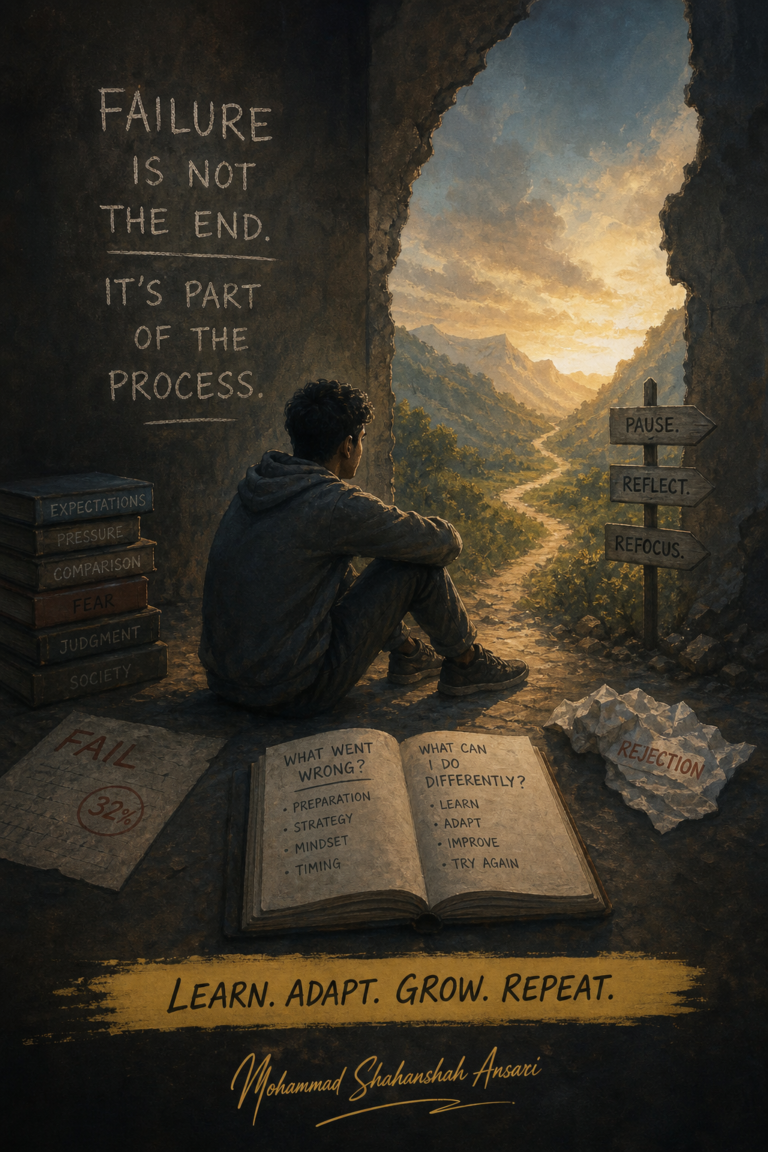
According to the UDISE+ 2024-25 Report and recent analyses of the All India Survey on Higher Education (AISHE), a concerning trend is evident. Although primary-level enrollment is nearly universal, there is a pronounced decline at the “Secondary School Cliff” (Classes 9–10), which leads to significant setbacks for both the Muslim community and India’s broader human development indicators.
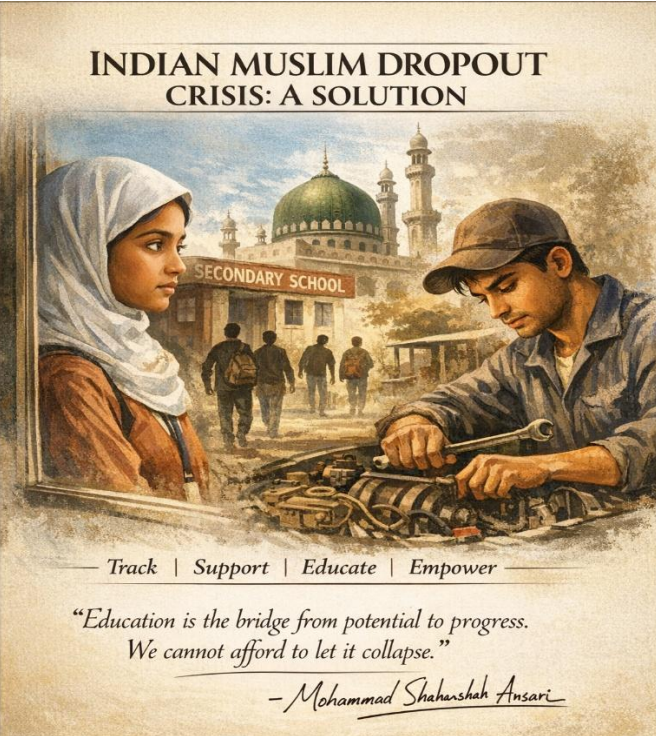
A comprehensive understanding of the scope and nature of the dropout problem is necessary before formulating effective policy interventions.
The phenomenon of the “leaky pipeline” is most pronounced in five states with the largest Muslim populations. Data indicate that the dropout issue is neither uniform nor random; rather, it is concentrated in specific geographic and economic contexts.
State-wise Dropout Snapshot
| State | Muslim Enrollment Decline (Higher Ed) | Dropout Hotspots | Primary Reason |
|---|---|---|---|
| Uttar Pradesh | 36% of national decline | Rampur, Moradabad, Azamgarh | Economic distress & Madrasa-mainstream gap [1] |
| Bihar | ~5.7% decline | Kishanganj, Araria, Purnia | Seasonal migration & infrastructure deficit |
| West Bengal | Significant Rural Attrition | Murshidabad, Malda | Lack of secondary schools in the vicinity |
| Maharashtra | 8.5% of national decline | Govandi (Mumbai), Malegaon | High opportunity cost of labour in slums [2] |
| Assam | Rising Secondary Attrition | Dhubri, Barpeta, Char areas | Identity/Documentation hurdles & floods |
The “Grade 9” Cliff
Research conducted by Jamia Millia Islamia (2025) identifies Age 15 (Grade 9) as the primary dropout point, coinciding with an increased “opportunity cost” of continued schooling. Boys are frequently drawn into informal employment, such as auto-repair or zari work, while girls are withdrawn due to safety concerns, inadequate female-only transportation, or pressures related to early marriage.
2. Why the System is Failing
The Financial Paradox
A 2025 study determined that, despite minority students receiving approximately ₹1,833 annually in government scholarships, the actual costs of schooling—including books, transportation, and private coaching—exceed ₹27,000. As a result, the notion of “free education” remains unattainable for students in the lowest economic quintile.
Government Budgetary Shifts
The Union Budget for 2026-27 perpetuated a concerning trend of reduced scholarship allocations. The Ministry of Minority Affairs (MoMA) budget for higher education scholarships experienced significant reductions, with certain schemes, including the Maulana Azad National Fellowship (MANF), remaining discontinued. Although infrastructure spending under programs such as PM-JVK increased, direct financial support to retain students in school declined.
3. A Systematic 5-10 Year Solution: The “Zero Dropout” Roadmap
Eliminating this issue by 2035 requires a transition from reliance on “ad-hoc charity” to the implementation of systematic institutional reforms.
Phase I: The Identification & Support Layer (Years 1–3)
• Establish Dropout Tracking Cells (DTCs) in collaboration with organisations such as the Association of Muslim Professionals (AMP) and Zakat Foundations. Develop a centralised “Digital Dropout Dashboard” to monitor student retention in the 100 most educationally disadvantaged districts. District teams should be assigned to ensure regular updates and to use the dashboard to identify at-risk students and implement targeted interventions.
• Establish Scholarship Help Desks, managed by local NGOs, to assist students with application processes, particularly Aadhaar linkages. Organise regular “Documentation Camps” to ensure that all eligible students receive the necessary guidance, thereby maximising the utilisation of allocated government funds.
Phase II: Re-Entry & Skill Integration
• Establish “Second Chance” Centres, funded by the AMU and Jamia Old Boys Associations, to facilitate the re-enrollment of dropouts. Utilise resources from the National Institute of Open Schooling (NIOS) at these Bridge Schools to enable students to complete Grades 10 and 12 while accommodating their work commitments.
• Promote partnerships between Muslim-owned businesses and schools to integrate vocational electives into the curriculum. Implement programs that equip students with practical skills, such as coding or mobile repair, thereby increasing the attractiveness of continued schooling for families.
Phase III: The Excellence Layer (Years 8–10)
• Implement a mentorship mandate in which each Muslim professional, including doctors, engineers, and chartered accountants, is assigned to guide and support at least one student from a local government school. This support should encompass both financial assistance and non-financial resources, such as social capital and career guidance, to address barriers faced by first-generation learners.
4. Roles and Responsibilities
What Muslim Professionals Should Be
Professionals should be encouraged to participate in School Management Committees (SMCs) rather than solely serving as donors. Their involvement can enhance oversight, including monitoring teacher attendance and ensuring the quality of mid-day meals, particularly in states such as Uttar Pradesh and Bihar.
What Muslim Businesses Should Do
Muslim businesses should realign their Corporate Social Responsibility (CSR) initiatives. Rather than limiting efforts to food distribution during Ramadan, they should prioritise funding “Safe Transport Buses” for girls in rural West Bengal and Assam. This intervention could reduce female dropout rates by nearly 40% through the provision of safe, reliable transportation to secondary schools.
The Critical Role of Alumni Associations (AMU/Jamia/Others)
Alumni networks represent a significant, underutilised resource. These groups possess the intellectual and financial capacity to establish “Community Coaching Centres” in every district. Such centres should serve as hubs for the AMP National Talent Search, facilitating early identification of talent and supporting students at risk of dropping out due to economic pressures.
5. Conclusion: Why This is Non-Negotiable
The educational crisis confronting Indian Muslims constitutes a national challenge rather than solely a community concern. Students who drop out in Grade 9 are excluded from participation in the modern economy, thereby increasing their vulnerability to exploitation.
Targeting the 100 most educationally disadvantaged districts, as outlined in the AMP 25-Year Roadmap, and leveraging Zakat-based crowdfunding models such as IndiaZakat can help develop a self-sustaining educational ecosystem. The next decade is critical for addressing this issue; failure to act may turn the demographic dividend into a demographic liability.
References & Citations
[1] UDISE+ Report 2024-25, Ministry of Education, Government of India.
[2] All India Survey on Higher Education (AISHE) 2021-22/2025 Analysis, Ministry of Education.
[3] Ministry of Minority Affairs, Budget Estimate 2026-27 (Rajya Sabha Unstarred Question No. 2673).
[4] AMP 25-Year Roadmap for Educational and Economic Development of Indian Muslims (2025).
[5] Determinants of Dropout of Muslims in Secondary Schools, Research Study, Jamia Millia Islamia (2025).