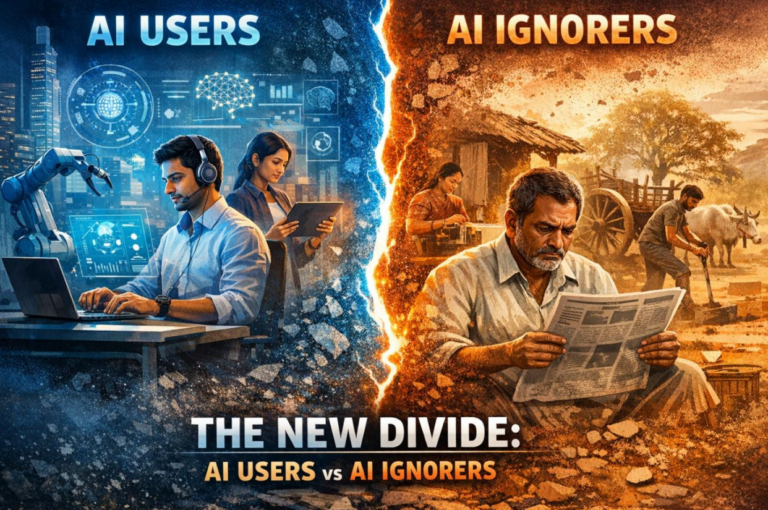
AI is rapidly changing jobs worldwide. People who do not learn AI skills are more likely to lose their jobs, have little or no pay increases, and face more unfairness, according to recent data and CEO opinions.
Risks for Common Individuals
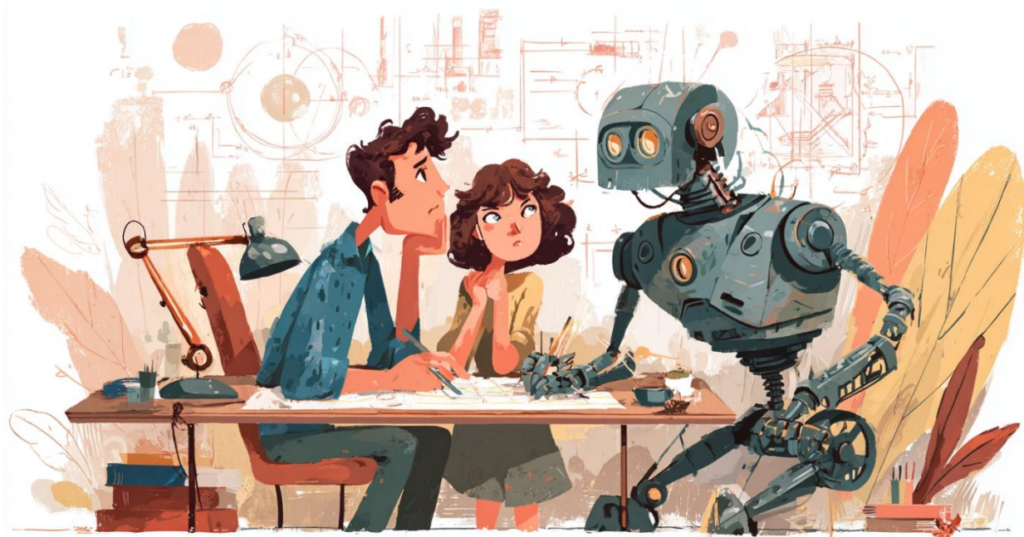
Workers who do not know how to use AI are more likely to lose their jobs to machines. The World Economic Forum says that 85 million jobs could disappear worldwide by 2026. Goldman Sachs says AI could take over tasks in 300 million jobs, especially in roles that do not require specialised skills, such as retail, where up to 65% of jobs could be done by machines. The number of young workers aged 22 to 25 in jobs that rely heavily on AI has already dropped by 13% since 2022.
Risks for Professionals
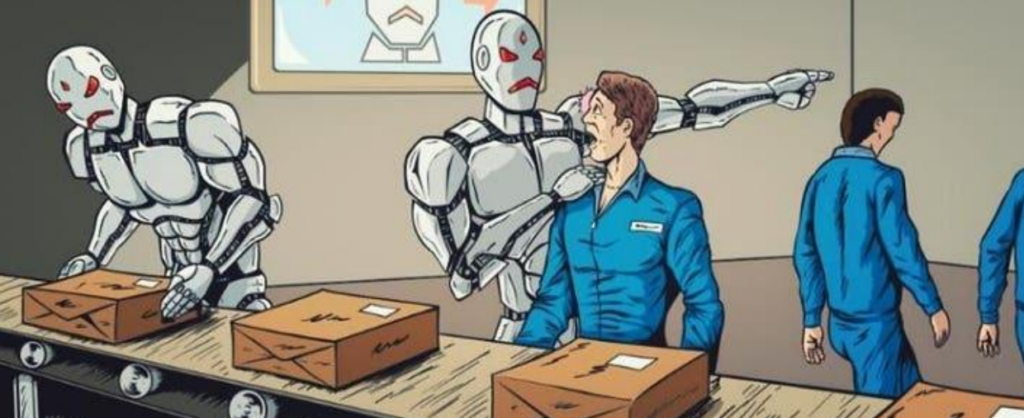
Those who do not learn AI may widen a $5.5 trillion skills gap by 2026. Right now, 90% of companies say they lack skilled workers, and only 35% of leaders feel ready. Jobs that use AI are changing 66% faster and pay 56% more to people with the right skills. People without AI skills risk their jobs becoming outdated and may have to change jobs more often. Brookings says 6.1 million U.S. workers have jobs that are both high-risk and hard to change.

AI & the future of Work from Top CEOs
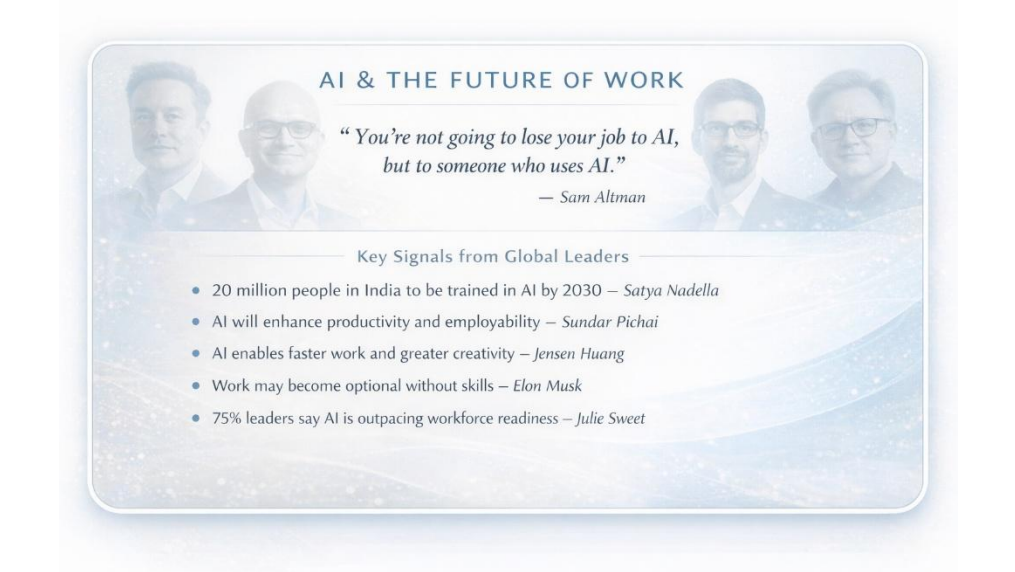
“You’re not going to lose your job to AI, but to someone who uses AI.” — Sam Altman
Key Signals from Global Leaders:
• 20 million people in India to be trained in AI by 2030 — Satya Nadella
• AI will enhance productivity and employability — Sundar Pichai
• AI enables faster work and greater creativity — Jensen Huang
• Work may become optional without skills — Elon Musk
• 75% leaders say AI is outpacing workforce readiness — Julie Sweet
Learning AI Skills is critical
It is important to avoid these risks and take advantage of new opportunities, such as the 78 million new jobs expected by 2026. Start learning AI skills now to stay ahead and protect your future. AI agents, which are computer systems that can do complicated tasks on their own, are making people more worried about losing jobs to machines. In India, informal workers are at greater risk because more AI agents are being used.
AI Disruption in India: 300 Million Jobs at Risk Without Upskilling
AI agents increase the risk of job loss in India’s large informal sector. The ILO estimates that 70% of current jobs there face a high risk of automation, affecting over 300 million blue-collar workers in manufacturing and services. Bank of Baroda predicts that 20 to 25 million jobs could be lost by 2030, mainly in IT, customer support, and retail. Bain expects a shortage of 1 million AI-skilled workers by 2027, even though there will be 2.3 million job openings. McKinsey warns that up to 60 million manufacturing jobs could be lost by 2030, especially in textiles and electronics, as AI automates entry-level tasks faster than new jobs are created. Without upskilling, India’s 56% employable workforce, according to the India Skills Report 2026, could see a bigger gap between urban and rural areas. However, learning AI skills could help boost hiring in smaller cities.