But these numbers don’t capture the real loss. What matters most about Urdu isn’t just whether the language survives, but that its unique way of seeing the world and expressing feelings is fading away.
What’s really disappearing isn’t only the language, but a special way of speaking that some families once used for daily life, guests, God, and death. These weren’t formal rules. People didn’t decide to speak like this; it just happened, passed down like a recipe, learned by watching and being there.
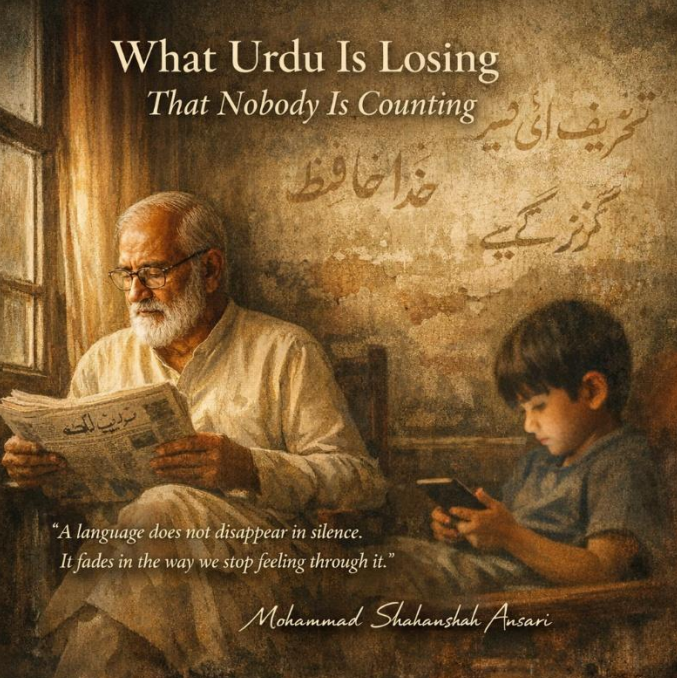
Think about how people used to talk to guests. It wasn’t just about food and where to sit; there was a special way of welcoming. Tashreef laiye, which means carrying honour and dignity, recognised that a guest’s presence made the room better. Guests weren’t just given a place—they were truly welcomed. This kind of hospitality doesn’t translate easily. Now, children and grandchildren just say “baitho” or “have a seat,” and something is lost.
The way people spoke about death was also unique. Instead of saying someone died, they would say guzar gaye, meaning passed through, or intiqal ho gaya, meaning departed or moved elsewhere. Marhoom meant someone who had received mercy, not just someone who had died. Each phrase reflected a gentle view of life and death. In this language, even grief had its own way of being expressed.
Taklif is another word that’s fading. While it means ‘discomfort’ or ‘trouble’ in the dictionary, it also meant the worry of causing trouble for someone you care about. ‘Aapko taklif na ho’—
I don’t want to trouble you—showed both the guest’s concern and the host’s reassurance. This exchange depended on everyone understanding what taklif really meant. Now, even people who still use the word often miss its deeper meaning.
This is what makes the register hard to explain—it’s more than just words. It’s a way of feeling and connecting that shapes how people treat each other. The Urdu spoken in Lucknow, Hyderabad, Bhopal or Patna wasn’t just about being polite; it shaped how people thought. The language itself made it almost impossible to be rude.
What’s taking its place isn’t a void, but a mix of Hindi, English, WhatsApp slang, and faint memories of the old ways. Most people don’t notice what’s missing because they never knew the original. The grandparents who spoke that way are passing on, their children speak a version of it, and their grandchildren only a faint shadow.
No census can record this deeper loss. No language survey will note the moment a family stopped saying ‘khuda hafiz’ and started saying ‘bye.’ This subtle loss—the register, the worldview, the emotional structure—doesn’t show up in the data, but it’s key to understanding what’s really at risk.
Politics hasn’t helped either. Urdu only became Uttar Pradesh’s second official language in 1989, after a constitutional amendment and a Supreme Court case. In December 2023, the state government removed Urdu and Persian from official documents and discontinued the Urdu exam for civil servants. In early 2025, translation services were added for Awadhi, Bhojpuri, Braj, and English, but not for Urdu, even though it is still officially the state’s second language. The message is clear: the language might still exist, but its place is quietly being erased.
That’s exactly why these things are fading away so quietly.